

Court marriage in Pakistan is a legal and lawful way for two adults to solemnize and register their marriage according to Pakistani law. It provides a secure option for couples who wish to marry with free consent, without unnecessary social pressure, while ensuring full legal protection of their marital rights.
This page explains the rules, legal requirements, and procedures governing court marriage in Pakistan.
Court marriage in Pakistan is conducted under:
A court marriage is considered fully valid and legal once it is properly solemnized and registered.
To qualify for court marriage in Pakistan, both parties must meet the following conditions:

+92316-6644789
+92302-6644789
+92333-2316871






According to Pakistani law:
Marriage below the legal age is not permitted and may result in legal consequences.
One of the most important rules of court marriage in Pakistan is free consent.
The bride willingly agree to the marriage without:
Consent is verified during the marriage process.
Typically, the following documents are required:
Additional documents may be required in special cases.
The general procedure includes:
The entire process is lawful, transparent, and secure.


Marriage registration is a mandatory legal requirement.
A registered Nikahnama serves as legal proof of marriage and protects the rights of both spouses.
Court marriage is commonly used for love marriages, offering:
The law recognizes marriage based on consent, not family approval.
Overseas Pakistanis can also conduct court marriage in Pakistan by:
Court marriage is usually completed within one day, provided all documents are complete and verified.
After court marriage, both spouses are entitled to:
Yes. Court marriage is 100% legal in Pakistan when conducted according to law. It carries the same legal status as any traditional marriage.
Court marriage offers:
Court marriage in Pakistan is legally defined as a marriage solemnized and registered in accordance with the country’s family laws, primarily under the Muslim Family Laws Ordinance, 1961. It is based on the free consent of both parties and conducted before a licensed Nikah Registrar or authorized legal authority. Once properly performed and registered, a court marriage holds the same legal status, rights, and obligations as any traditional marriage recognized under Pakistani law.
Eligibility for court marriage in Pakistan is determined by legal capacity and personal consent. Both individuals must be adults under Pakistani law and mentally sound to understand the nature of marriage. The marriage must be entered into willingly, without pressure or coercion. Additionally, neither party should be in a prohibited relationship under Islamic or statutory law, and any previous marriage must be lawfully dissolved before contracting a new one.
The minimum age requirement for court marriage in Pakistan is clearly defined under national family laws to protect the rights and welfare of individuals. Both the bride and the groom must have reached the age of eighteen at the time of marriage. Any court marriage conducted below this legal age is considered unlawful and may result in penalties, making age verification an essential part of the court marriage process.
Consent and free will are fundamental requirements for a valid court marriage in Pakistan. Both parties must willingly agree to the marriage without any form of pressure, threat, deception, or undue influence from family members or others. During the court marriage process, consent is formally confirmed through affidavits and verbal statements to ensure that the decision to marry is made independently and with full understanding of its legal consequences.
The documentation required for court marriage in Pakistan is meant to verify identity, marital status, and consent of both parties. Generally, valid CNICs or identity documents, recent photographs, and copies of witnesses’ CNICs are required. If either party was previously married, legal proof such as a divorce decree or death certificate must be provided. Proper documentation ensures lawful registration and legal validity of the marriage.
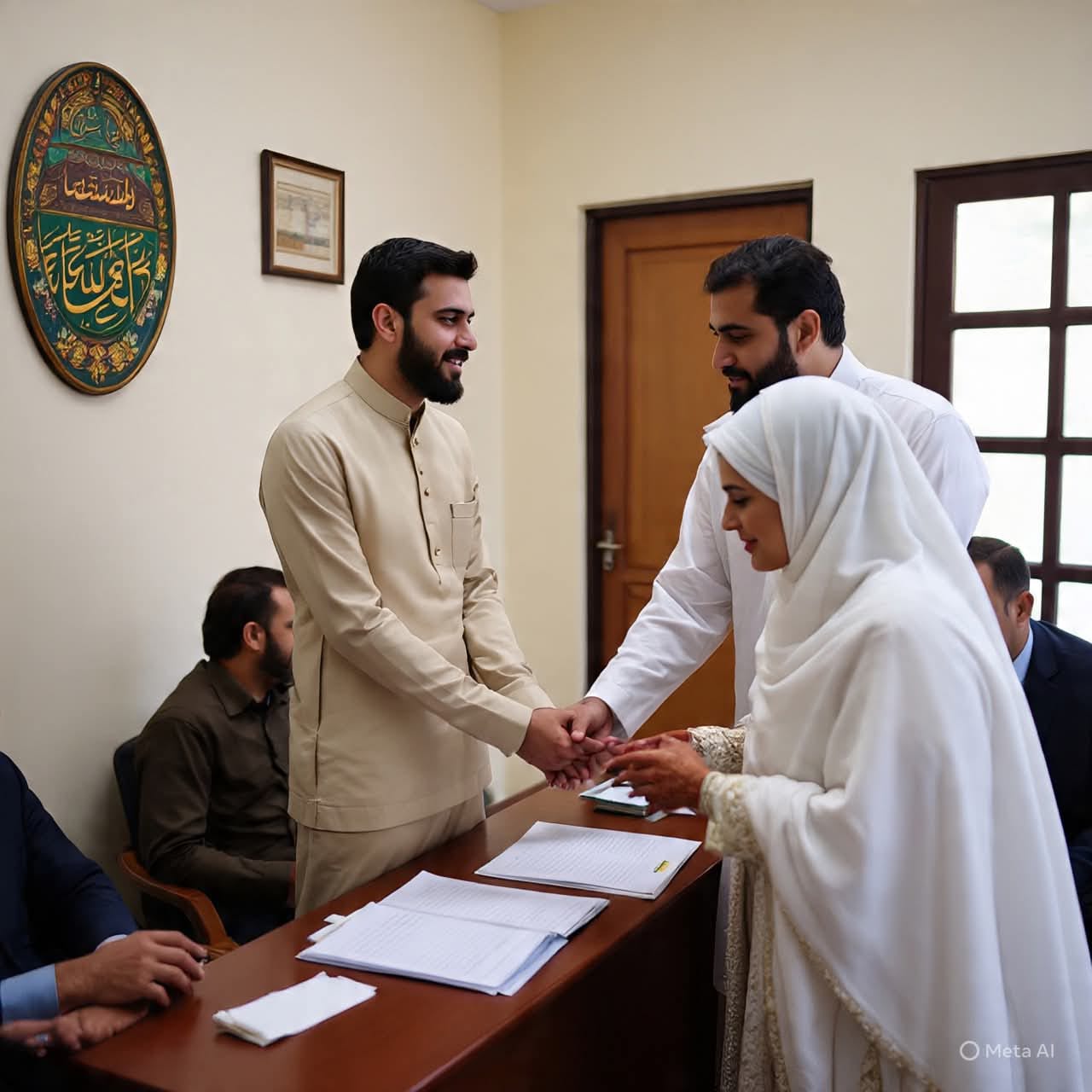
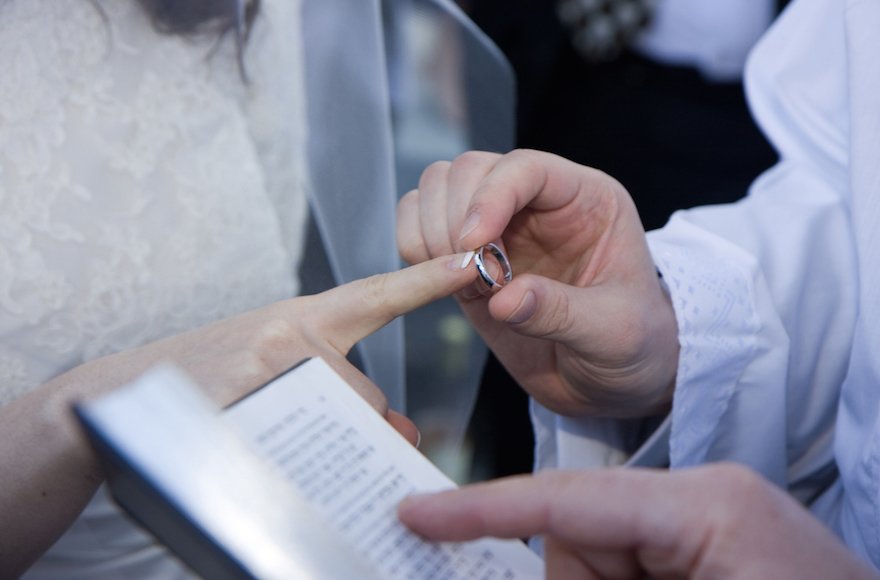
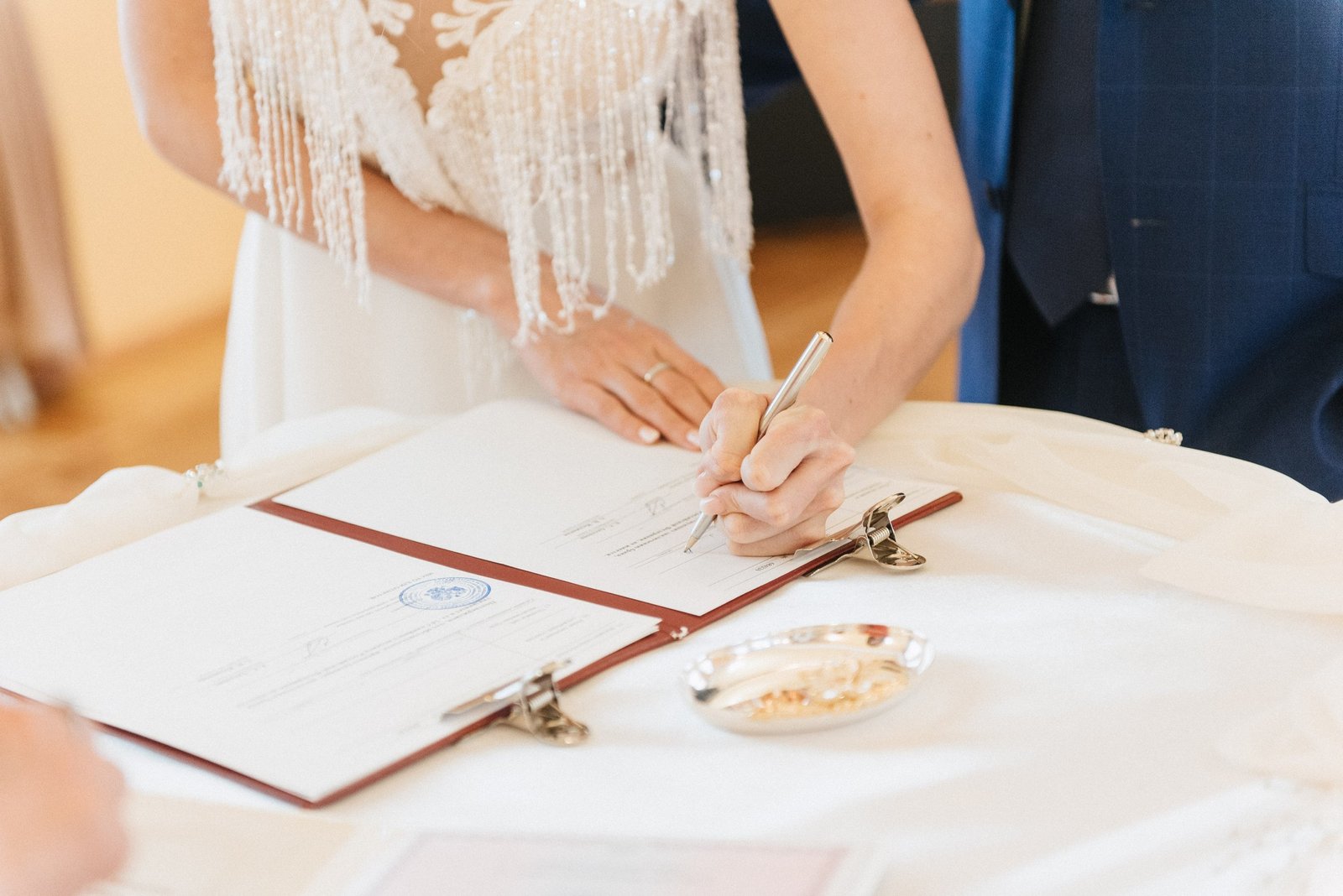
The court marriage procedure in Pakistan follows a structured and lawful sequence to ensure validity. It begins with verification of identity documents and preparation of affidavits confirming free consent. The Nikah is then solemnized by a licensed Nikah Registrar in the presence of witnesses. After signatures are obtained, the Nikahnama is officially registered, completing the legal marriage process.


In a court marriage in Pakistan, the Nikah Registrar plays a central legal role by solemnizing the marriage and ensuring all legal requirements are fulfilled. The registrar verifies identities, records consent, and completes the Nikahnama. Witnesses, usually two adults, are required to observe the Nikah, confirm the consent of both parties, and sign the marriage documents to validate the process.
Marriage registration under Pakistani law is a compulsory legal requirement that gives formal recognition to the marital relationship. After the Nikah is solemnized, the Nikahnama must be properly filled, signed, and registered with the relevant Union Council or authorized authority. This registered document serves as official proof of marriage and ensures enforcement of legal rights related to inheritance, family records, and marital status under Pakistani family laws.
Court marriage in Pakistan provides a legal avenue for couples in love marriages and certain interfaith situations to solemnize their union lawfully. It ensures that the marriage is recognized under national laws, even when family consent may be absent. Through the court procedure, couples can register their marriage officially, protecting their legal rights and offering a clear framework for recognition and documentation under Pakistani law.
Overseas Pakistanis can legally conduct court marriages in Pakistan by following established procedures to ensure compliance with national laws. Required documents often include valid CNICs, passports, and attested affidavits of consent. The marriage is solemnized by a licensed Nikah Registrar in the presence of witnesses and officially registered, providing legal recognition and protecting the rights of both spouses under Pakistani law.
The time required to complete a court marriage in Pakistan is generally short, provided all documents are accurate and available. Typically, the process can be completed in a single day, including verification of identities, preparation of affidavits, solemnization by a licensed Nikah Registrar, and official registration of the Nikahnama. Delays may occur if additional documentation or approvals are needed.
Court marriage in Pakistan involves certain fees and legal costs to ensure the process is properly documented and recognized by law. These may include registration charges, nominal service fees for the Nikah Registrar, and administrative costs for verification of documents. While fees are generally affordable, additional expenses may apply for attested affidavits or special cases, ensuring the marriage is legally valid and fully protected under Pakistani law.
A court marriage in Pakistan holds full legal validity once it is properly solemnized and registered. After registration, both spouses enjoy all legal rights, including inheritance, maintenance, and spousal protections under family law. The Nikahnama serves as official proof, safeguarding marital status and ensuring that both partners can enforce their legal entitlements in matters of property, succession, and family obligations.
Many people in Pakistan misunderstand court marriage, believing it is only for couples without family consent or that it is less legitimate than traditional marriages. In reality, court marriage is fully legal, recognized under national law, and provides the same rights and protections as any other marriage. It ensures transparency, legal documentation, and protection of both spouses’ rights, regardless of social or cultural assumptions.
Pakistan Marriage Services
National legal assistance for court marriage, online Nikah, and marriage registration across Pakistan.
Karachi Head Office: Qanoon House, Johar Chowrangi, Gulistan-e-Johar, Karachi, Pakistan
Court Marriage | Online Nikah | Nikah Nama | Marriage Registration Certificate