

Online Nikah-e-Shari’a refers to a marriage contract conducted through digital means such as video calls, teleconferencing, or online communication platforms while strictly fulfilling Islamic requirements. With technological advancements, Muslims increasingly rely on online platforms for essential life decisions, including marriage. Islam, being a practical and adaptable religion, focuses on substance rather than medium, making online Nikah-e-Shari’a a legitimate discussion in contemporary fiqh.
Nikah in Islam is a solemn civil contract grounded in offer (Ijab) and acceptance (Qubool), conducted willingly between two competent adults. Shari’a does not mandate a physical venue, ceremonial hall, or state-issued certificate as a condition of validity. The essence of Nikah lies in mutual consent, lawful witnesses, and compliance with Islamic principles, not the format or location.

Classical Islamic jurisprudence does not make physical presence a compulsory element of Nikah. Islamic scholars across various schools of thought have acknowledged Nikah through representatives (Wakeel) and distant communication for centuries. Online Nikah-e-Shari’a simply replaces physical distance with real-time digital communication, preserving the same legal substance recognised by Islamic law.
Ijab and Qubool are the backbone of every valid Nikah. In an online Nikah-e-Shari’a, these elements are clearly articulated verbally during live communication. As long as both parties understand, consent freely, and pronounce acceptance in clear terms, the Nikah remains valid under Islamic jurisprudence regardless of the online medium used.
+92316-6644789
+92333-1127836
+92333-1127832

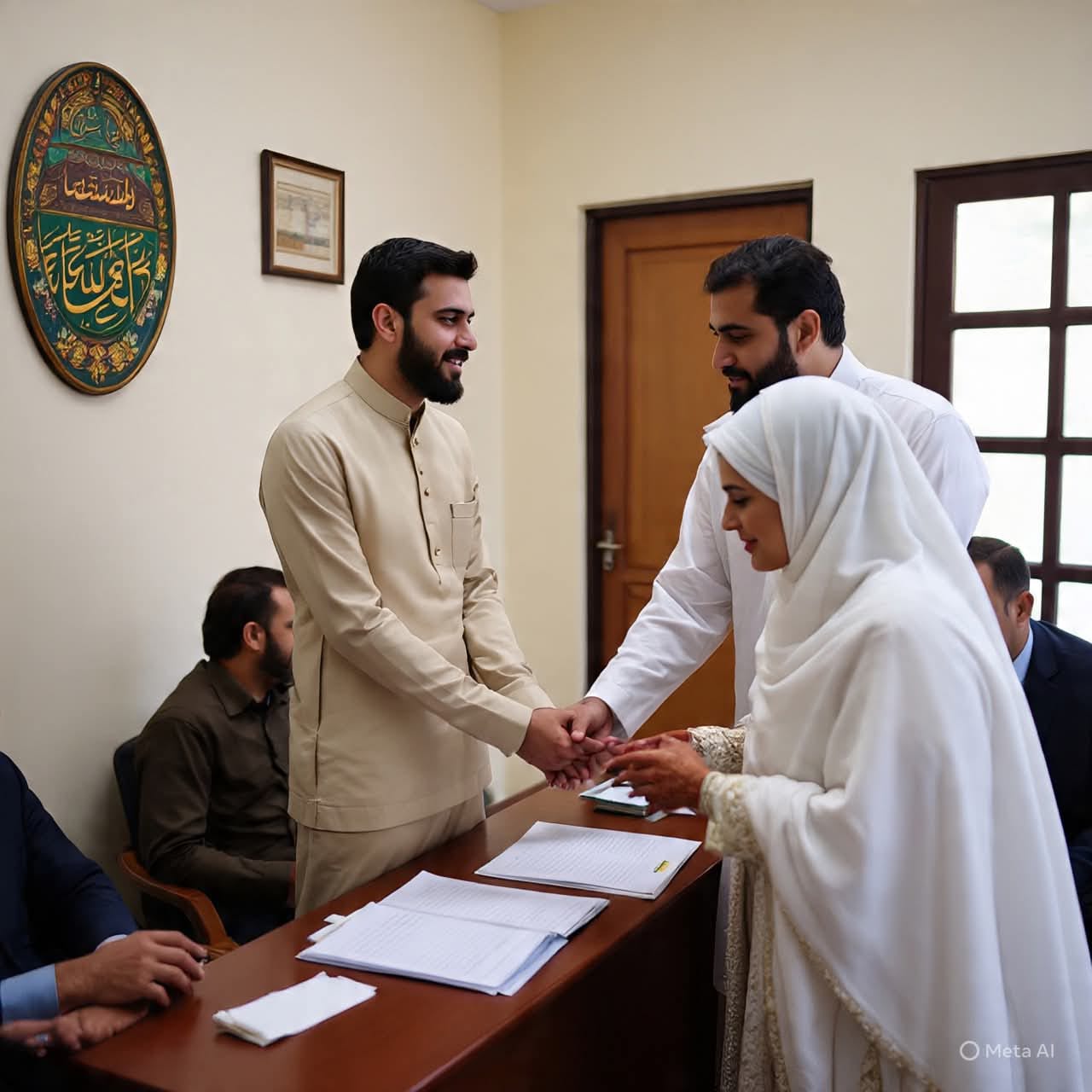
Witnesses are an essential Shari’a requirement for Nikah. In an online Nikah-e-Shari’a, witnesses may join the virtual session or be physically present with one party while clearly hearing and observing the offer and acceptance. Islamic law focuses on the witnesses’ awareness and verification, not their physical proximity.
Islam does not condition the validity of Nikah on state registration. A Nikah performed in compliance with Shari’a remains fully valid even if it is not registered with any government authority. Registration is an administrative requirement introduced by states for record-keeping and legal facilitation, not a religious prerequisite.
Shari’a validity and civil registration serve different purposes. Online Nikah-e-Shari’a without registration fulfils religious obligations, while registration facilitates legal recognition in courts and government departments. Failure to register may create legal complications, but it does not nullify the Islamic legitimacy of the marriage.
Islamic jurisprudence recognises Nikah conducted through letters, messengers, or delegated authority. Online Nikah-e-Shari’a is simply an advanced form of these accepted methods. Recorded or documented sessions further strengthen evidentiary value without affecting the core validity of the Nikah under Shari’a.
Free and informed consent is a non-negotiable condition in Islamic Nikah. Online Nikah-e-Shari’a allows direct communication between parties, reducing coercion and enhancing transparency. As long as consent is explicit and voluntary, the Nikah meets Islamic legal standards.
For certain schools of thought, the presence or consent of a Wali is essential. Online Nikah-e-Shari’a accommodates this requirement by allowing the Wali to participate remotely or appoint a representative. Shari’a flexibility ensures compliance without invalidating the marriage.
Mahr remains a compulsory element of Nikah irrespective of the medium. In an online Nikah-e-Shari’a, Mahr must be specified, agreed upon, and acknowledged during the Nikah session. Digital communication does not diminish this obligation or its enforceability under Islamic law.
Maqasid-e-Shari’a emphasise the protection of faith, lineage, dignity, and social order. Online Nikah-e-Shari’a supports these objectives by enabling lawful marriages where physical barriers, distance, or legal constraints might otherwise lead to hardship or sin.
A common misconception is that an unregistered Nikah is invalid in Islam. This belief has no foundation in the Qur’an or Sunnah. Registration is a regulatory mechanism of the modern state, not an element of Shari’a, and its absence does not negate a valid online Nikah-e-Shari’a.
Online Nikah-e-Shari’a is particularly relevant for international marriages and long-distance relationships. Islam permits such Nikahs provided all Shari’a conditions are fulfilled, making online platforms a lawful and practical solution without compromising religious integrity.
From an Islamic perspective, testimony and acknowledgement are primary evidence. Recorded online Nikah-e-Shari’a sessions, witness statements, and documented Mahr agreements enhance proof without affecting the religious validity of the marriage.
While valid in Islam, couples are ethically encouraged to pursue registration where possible to protect rights related to inheritance, maintenance, and legitimacy of children. Islam promotes the prevention of disputes even when the marriage itself is already valid.
Cultural resistance often confuses tradition with religion. Online Nikah-e-Shari’a challenges outdated assumptions while remaining firmly within Islamic principles. Social acceptance evolves, but Shari’a validity remains constant.
Contemporary Islamic scholars largely agree that online Nikah-e-Shari’a is permissible when the conditions of Nikah are satisfied. The consensus is rooted in classical fiqh principles that prioritise intention, consent, and lawful procedure over formality.
Islam strictly warns against declaring lawful acts unlawful. Declaring an online Nikah-e-Shari’a invalid solely due to lack of registration risks serious religious error, especially when all Islamic conditions have been met.
Online Nikah-e-Shari’a without registration is valid in Islam when conducted according to Shari’a principles. Registration enhances legal protection but does not define religious legitimacy. Islam remains a religion of ease, adaptability, and justice, accommodating modern realities without compromising divine law.


Yes, Online Nikah-e-Shari’a without registration is valid in Islam if all essential Shari’a conditions are fulfilled, including Ijab, Qubool, witnesses, consent, and Mahr. Islamic law does not require state registration for the validity of Nikah.
No, Islam does not require Nikah registration for a marriage to be lawful. Registration is a civil requirement introduced by modern states and does not affect the religious validity of a Nikah performed according to Shari’a.
Yes, Nikah can be performed online according to Islamic law as long as both parties communicate clearly, consent freely, and witnesses hear and observe the offer and acceptance during the online Nikah-e-Shari’a session.
Physical presence is not mandatory for Nikah in Islam. Islamic jurisprudence allows Nikah through representatives, written communication, and distant means, which supports the validity of Online Nikah-e-Shari’a.
Yes, witnesses are required for Online Nikah-e-Shari’a just as they are for a physical Nikah. The witnesses must clearly hear and understand the Ijab and Qubool, whether they are physically present or attending online.
No, lack of registration does not make Online Nikah sinful in Islam. A Shari’a-compliant Nikah remains lawful even if it is not registered, though registration is recommended to avoid legal and social complications.
Many contemporary Islamic scholars accept Online Nikah-e-Shari’a when all Islamic conditions are met. Their opinions are based on established principles of fiqh that prioritise substance over form.
Yes, Mahr can be fixed during an Online Nikah-e-Shari’a. It must be clearly specified, agreed upon by both parties, and acknowledged during the Nikah, regardless of whether the Nikah is registered or not.
Consent is valid in Online Nikah-e-Shari’a as long as it is clear, voluntary, and free from pressure. Online communication can sometimes enhance clarity by allowing direct interaction between both parties.
Yes, Online Nikah-e-Shari’a can protect Islamic modesty by reducing unnecessary physical interaction while still fulfilling all Shari’a requirements for a valid marriage.
The requirement of a Wali depends on the school of thought. Online Nikah-e-Shari’a allows the Wali to participate remotely or appoint a representative, ensuring compliance with Islamic jurisprudence.
Yes, Online Nikah-e-Shari’a is particularly suitable for overseas and long-distance marriages. Islam permits such Nikahs provided all Shari’a conditions are fulfilled properly.
An unregistered Online Nikah-e-Shari’a is fully recognised in Islam if it fulfils Shari’a requirements. Recognition by the state is separate from recognition under Islamic law.
From an Islamic perspective, witness testimony is primary evidence. However, recorded Online Nikah-e-Shari’a sessions can support proof and help prevent disputes without affecting validity.
Islam does not discourage Online Nikah-e-Shari’a. Instead, Islam encourages lawful marriages and provides flexibility to accommodate changing circumstances while maintaining Shari’a principles.
Yes, Online Nikah-e-Shari’a is valid without a Nikah Registrar if all Islamic conditions are met. A registrar facilitates documentation, but it is not a religious requirement.
While valid in Islam, an unregistered Online Nikah-e-Shari’a may create legal challenges regarding inheritance, maintenance, or official records. These issues relate to civil law, not Shari’a validity.
No, declaring an unregistered Nikah online invalid without a Shari’a basis is not allowed in Islam. Declaring lawful acts unlawful contradicts Islamic legal principles.
Yes, couples are encouraged to register their Online Nikah-e-Shari’a later, where possible, to safeguard legal rights while acknowledging that the Nikah is already valid in Islamic jurisprudence.
The Islamic ruling is clear: Online Nikah-e-Shari’a without registration is valid in Islam when all Shari’a conditions are fulfilled. Registration supports legal protection but does not define religious legitimacy.
Pakistan Marriage Services
National legal assistance for court marriage, online Nikah, and marriage registration across Pakistan.
Karachi Head Office: Qanoon House, Johar Chowrangi, Gulistan-e-Johar, Karachi, Pakistan
Court Marriage | Online Nikah | Nikah Nama | Marriage Registration Certificate