

The digital transformation of legal services has significantly altered how personal status laws are applied in the 21st century. In Pakistan, one of the most notable shifts has been the acceptance and regularization of the “Online Nikah” or remote marriage ceremony. While traditionally marriage was perceived as an event requiring physical proximity, modern legal interpretations and the necessities of a globalized workforce have paved the way for a robust system that allows couples to solemnize their union across borders while remaining strictly within the bounds of Sharia and Pakistani civil law.
The primary legal instrument governing marriage for Muslim citizens in Pakistan is the Muslim Family Laws Ordinance (MFLO) of 1961. While the original drafters could not have envisioned video conferencing, the core requirements of a valid marriage contract—offer and acceptance (Ijab-o-Qubool), the presence of witnesses, and the presence of a legal guardian or representative—remain constant.
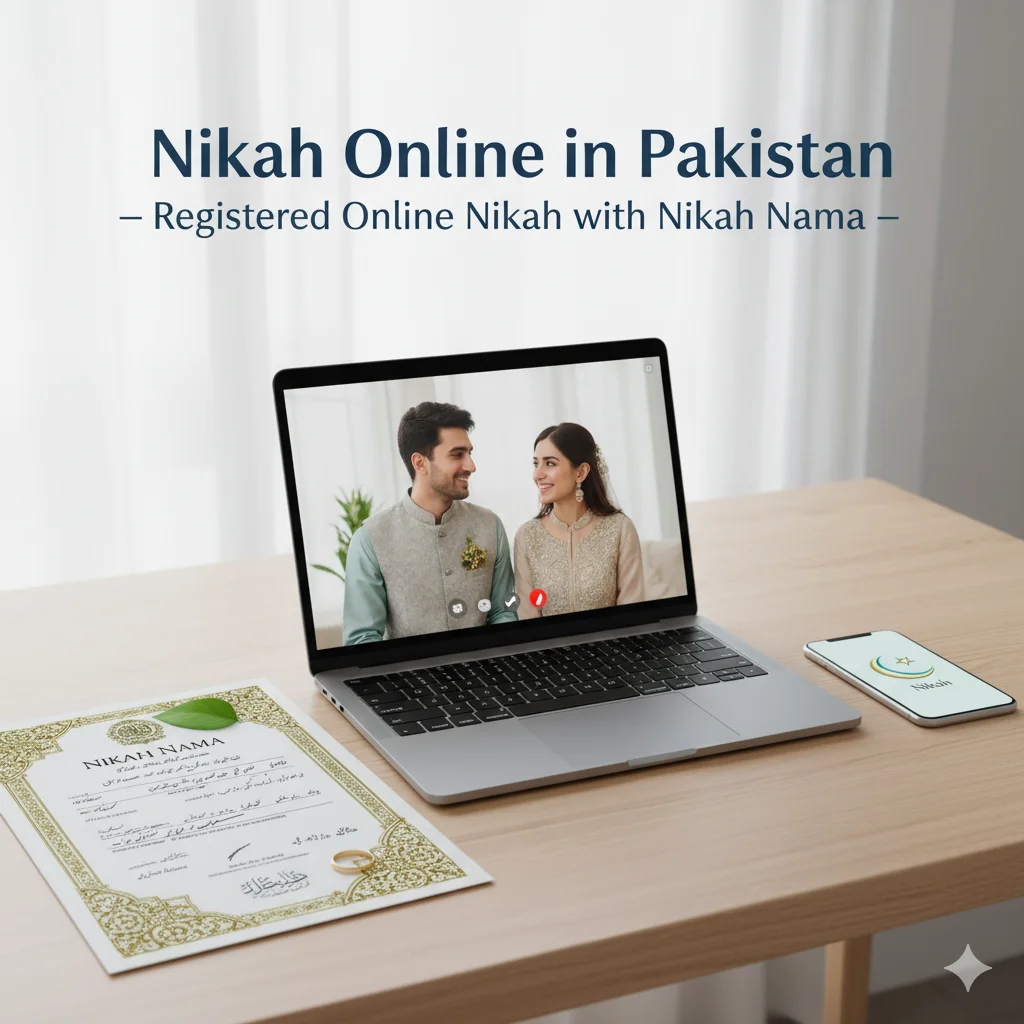
Under Pakistani law, a marriage contract is valid if the consent is given freely and the parties are of legal age (18 years across most provinces as of 2026). The shift toward digital ceremonies was accelerated by judicial precedents that recognized the validity of proxy marriages, where one party appoints a Vakeel (representative) to sign the Nikah Nama on their behalf. Today, it utilizes high-definition video platforms to ensure that the Nikah Khawan (Registrar) can verify the identity of the bride and groom in real-time, satisfying the requirement for a “single sitting” ceremony.
Despite the convenience of a remote ceremony, the evidentiary requirements are no less stringent than a traditional court marriage. To ensure the marriage is enforceable and recognized by authorities like NADRA, several criteria must be met:
Pakistan Marriage Services assists couples in completing legal marriage registration across Pakistan, ensuring that these remote proceedings are documented with the same precision as in-person ceremonies.
+92316-6644789
+92302-6644789
+92333-2316871

The most critical aspect of an online Nikah is not the video call itself, but the subsequent administrative filing. A common mistake is assuming that a religious ceremony over the internet is sufficient. Without formal state registration, the marriage lacks legal protection regarding inheritance, child custody, and travel rights.
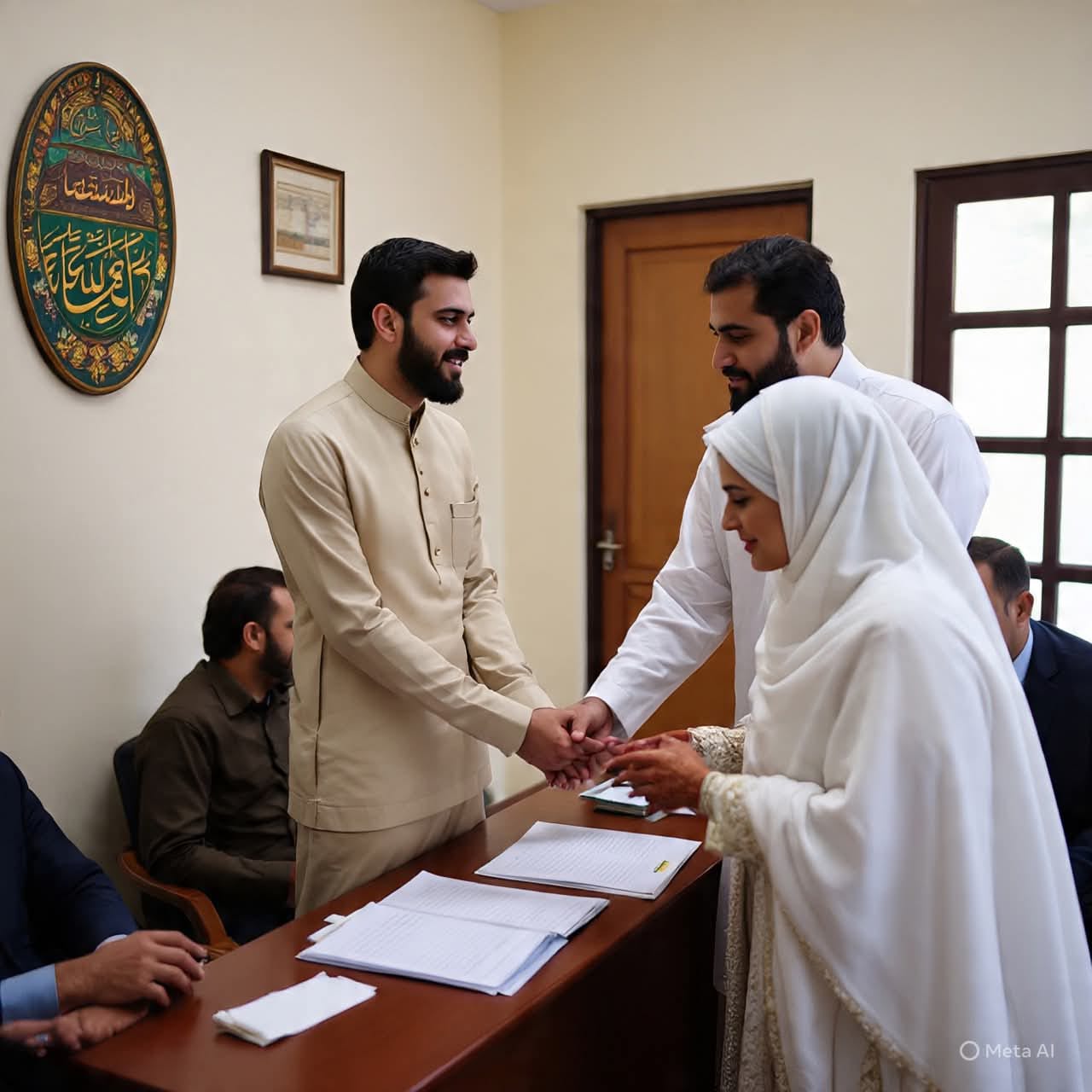
Once the oral ceremony is completed via video link, the Nikah Nama is signed by the groom, the bride (or her Vakeel), the witnesses, and the licensed Nikah Registrar. This document is then processed through the relevant Union Council. For residents of the provincial capital of Sindh, following the specific protocols is essential, as local Union Councils have specific filing requirements for digitized records.
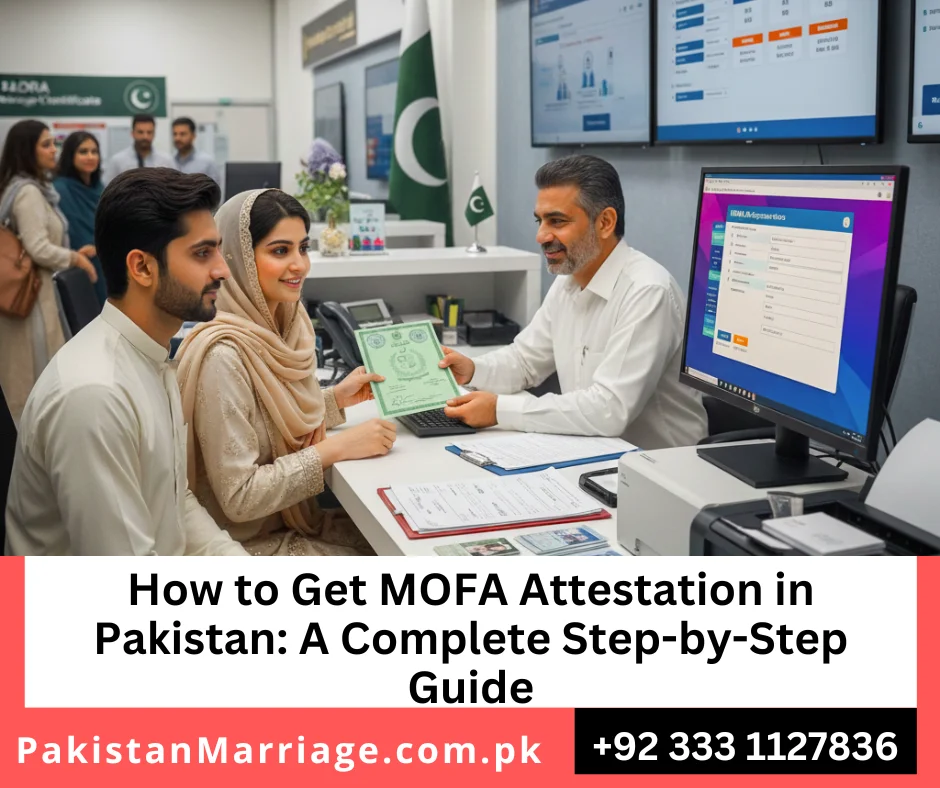
Following the local registration, the information is uploaded to the national database, allowing the couple to obtain a Computerized Marriage Registration Certificate (CMRC). This is the definitive document required for spouse visa applications and other international legal matters.
Courts in Pakistan have generally taken a progressive view of technological integration in family law. The superior judiciary has noted that as long as the identity of the parties is not in doubt and the consent is verified, the medium of communication does not invalidate the contract. However, couples should be cautious of “service providers” who offer ceremonies without proper government-licensed Registrars.
For overseas Pakistanis, the online Nikah is often the only viable way to formalize a relationship when travel is restricted or during urgent immigration timelines. It provides a bridge between the religious necessity of the Nikah and the civil necessity of state registration.
While the process is streamlined, it requires careful coordination. The signatures on the physical Nikah Nama must match the identity documents exactly, and the video recording of the ceremony is often kept as a secondary form of evidence in case the marriage is ever challenged in a family court.
By adhering to the established legal framework, couples can ensure that their digital union carries the full weight of the law. Engaging with professionals who understand the intersection of technology and the MFLO ensures that the transition from a digital “I do” to a state-recognized marriage is seamless and legally sound.
Pakistan Marriage Services
National legal assistance for court marriage, online Nikah, and marriage registration across Pakistan.
Karachi Head Office: Qanoon House, Johar Chowrangi, Gulistan-e-Johar, Karachi, Pakistan
Court Marriage | Online Nikah | Nikah Nama | Marriage Registration Certificate