

Pakistani Nikah Nama Form in Urdu and English explains all 25 columns of the official marriage contract used for Nikah registration in Pakistan. It helps couples understand legal entries, dower details, witness information, delegated divorce rights, and registration requirements under Pakistani family law.
Pakistani Nikah Nama Form explained in Urdu and English, including the 25 columns, legal requirements, conditions of marriage, role of witnesses, and importance of the Islamic marriage contract in Pakistan.
Pakistani Nikah Nama is the official marriage contract used for Nikah registration, recording the legal consent of the bride and groom under Muslim family law.
The Nikah Nama contains 25 official columns covering names, addresses, witnesses, dower details, and contractual conditions agreed at marriage.
The Pakistani Nikah Nama is commonly available in Urdu and English, helping families understand each legal entry clearly and correctly before registration.
Nikah Nama records Haq Mehr, immediate or deferred payment terms, and financial rights agreed between husband and wife.
Witness signatures and licensed Nikah Registrar certification make the Nikah Nama legally recordable for Union Council registration.
The Nikah Nama becomes the primary document used for issuing the computerized Marriage Registration Certificate in Pakistan.


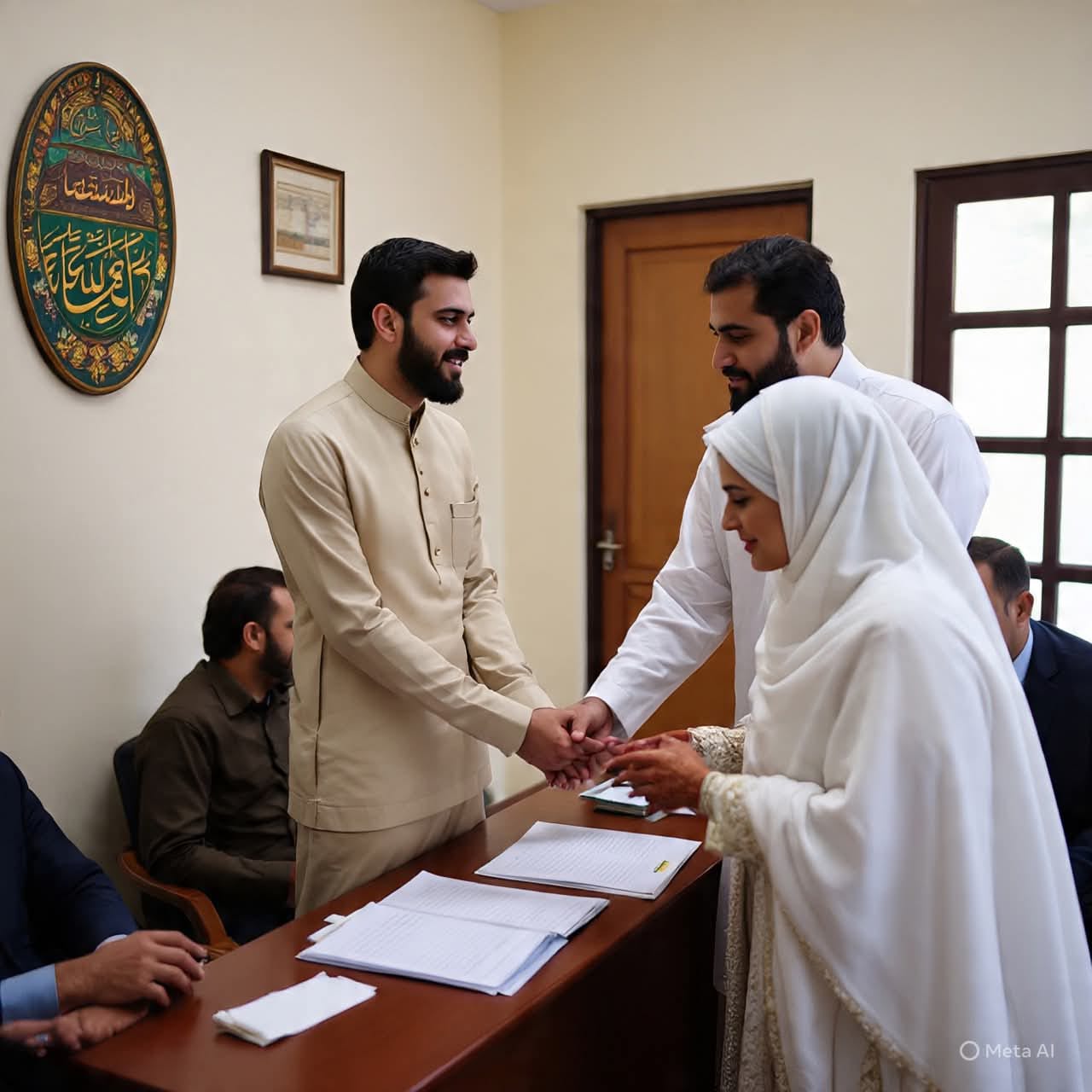

The Pakistani Nikah Nama Form is the official Islamic marriage contract used to record the details of a Nikah in Pakistan. This document formally records the agreement between the bride and groom and establishes the legal and religious framework governing their marriage.
The standard Nikah Nama used in Pakistan contains 25 columns, which capture essential information about the marriage, including the identities of the bride and groom, the amount of dower (mehr), the names of witnesses, and the terms agreed upon between the parties. The Nikah Nama may be written in Urdu or English, and once signed and registered, it becomes the primary documentary evidence of the marriage.
In Islamic law, marriage is a contract (aqd-e-nikah), and the Nikah Nama serves as the written record of that contract. Under Pakistani family law, the document also forms the basis for official marriage registration and legal recognition.
The Nikah Nama serves as the formal record relied upon for later registration and legal reference. It establishes the marital relationship between the spouses and records the rights and obligations agreed upon at the time of marriage.
The document generally includes:
Because the Nikah Nama records the marriage contract, it becomes an important document in matters involving family registration, inheritance, marital rights, and legal proceedings.
The traditional Nikah Nama used in Pakistan is structured into 25 columns, each capturing specific information about the marriage contract.
The form includes:
Section | Details Recorded |
Bride and Groom Details | Names, ages, addresses, and identification information |
Guardian (Wali) Information | Where applicable, details of the bride’s guardian |
Witness Details | Names and addresses of witnesses to the marriage |
Mehr (Dower) | Amount of prompt or deferred dower agreed |
Marriage Conditions | Special conditions mutually agreed upon between spouses |
Nikah Registrar Information | Details of the authorized Nikah registrar |
Date and Place of Marriage | Official record of where the Nikah was performed |
These entries ensure that the marriage contract is recorded clearly and accurately.
One important section of the Nikah Nama is the column for marriage conditions. Islamic law allows spouses to agree upon lawful conditions governing their marital relationship.
Such conditions may include:
These conditions should be written clearly in the Nikah Nama at the time of marriage. If additional agreements are made later, they may be documented separately and registered where necessary.
To ensure that the Nikah Nama is legally valid, certain procedural requirements must be fulfilled.
These typically include:
These steps ensure that the marriage is recognized under Pakistani law and recorded in official registers.
Witnesses play an important role in validating the Nikah contract. Their presence confirms that the marriage was performed with the consent of the parties.
Under Islamic principles, witnesses serve to:
Their names and addresses are recorded in the Nikah Nama to provide legal verification of the marriage.
The Nikah Nama serves as the primary documentary proof of marriage. It may be required for various legal and administrative purposes, including
Because of its legal significance, the Nikah Nama should be completed carefully and preserved safely.
It is important to distinguish between the Nikah Nama and the Marriage Registration Certificate.
The Nikah Nama is the original marriage contract, signed by the parties, witnesses, and Nikah registrar. After the Nikah is registered with the Union Council, a Marriage Registration Certificate may be issued as official confirmation of the marriage record.
Thus, the Nikah Nama forms the foundation of the marriage record, while the certificate provides an officially registered copy.
Accuracy in the Nikah Nama is essential because errors in names, dates, or identification details may cause difficulties in future legal or administrative procedures.
Before signing the document, the parties should ensure that:
Careful preparation of the Nikah Nama helps prevent disputes and ensures that the marriage record remains legally reliable.
Keeping a properly preserved copy of the Nikah Nama ensures that the details of the marriage contract remain accessible whenever needed.
Couples should retain certified copies of their Nikah Nama for future reference. These copies may be required when applying for official documentation or resolving legal matters involving marital status.
Keeping a properly preserved copy of the Nikah Nama ensures that the details of the marriage contract remain accessible whenever needed.
The standard Pakistani Nikah Nama Form contains 25 columns, each designed to record specific details of the Islamic marriage contract. These entries ensure that the marriage is documented accurately and that the rights and obligations of both spouses are clearly recorded.
The Nikah Registrar is responsible for completing these columns in accordance with the information provided by the parties and witnesses.
Column | Information Recorded |
1 | Serial number of the Nikah entry in the register |
2 | Date of marriage |
3 | Place where the Nikah is performed |
4 | Name of the bridegroom |
5 | Age of the bridegroom |
6 | Address of the bridegroom |
7 | Marital status of the bridegroom (single, widower, divorced) |
8 | Name of the bride |
9 | Age of the bride |
10 | Address of the bride |
11 | Marital status of the bride |
12 | Name of the bride’s guardian (Wali), if applicable |
13 | Relationship of the guardian with the bride |
14 | Name of the person who solemnized the Nikah |
15 | Names of witnesses to the marriage |
16 | Addresses of the witnesses |
17 | Amount of Mehr (dower) agreed |
18 | Details of prompt or deferred dower |
19 | Special conditions agreed between the parties |
20 | Whether the bride has delegated the right of divorce |
21 | Details regarding maintenance or financial arrangements |
22 | Signatures or thumb impressions of the bride and groom |
23 | Signatures of witnesses |
24 | Signature and seal of the Nikah Registrar |
25 | Registration entry and official record details |
These columns collectively form the complete written record of the marriage contract, ensuring that the Nikah is properly documented under both Islamic principles and Pakistani family law.
In Pakistan, a Nikah is recognized as both a religious contract under Islamic law and a legally enforceable marital agreement under Pakistani family law. The Nikah Nama serves as the written record of this marriage contract and forms the basis for official marriage registration and legal recognition.
The legal framework governing marriage registration in Pakistan primarily derives from the Muslim Family Laws Ordinance, 1961, which regulates the registration of Muslim marriages and requires Nikah Registrars to maintain official records of marriages within their jurisdiction.
Under this system, every Nikah performed by a licensed Nikah Khawan must be recorded in the Nikah register and reported to the relevant Union Council or local authority. The Union Council maintains the official marriage record and may issue a Marriage Registration Certificate based on the information recorded in the Nikah Nama.
The Nikah Nama therefore plays a central role in establishing the legal validity of a marriage by recording the identities of the spouses, dower details, witnesses, and agreed marriage conditions.
In disputes relating to marital rights, dower claims, inheritance issues, or family court proceedings, the Nikah Nama is often relied upon as primary evidence of the marriage contract. Courts may examine its contents to determine the terms agreed between the parties and the legal obligations arising from marriage.
Because of its legal significance, the Nikah Nama should be completed carefully, signed properly, and preserved safely for future legal and administrative use.
Pakistan Marriage Services
National legal assistance for court marriage, online Nikah, and marriage registration across Pakistan.
Karachi Head Office: Qanoon House, Johar Chowrangi, Gulistan-e-Johar, Karachi, Pakistan
Court Marriage | Online Nikah | Nikah Nama | Marriage Registration Certificate