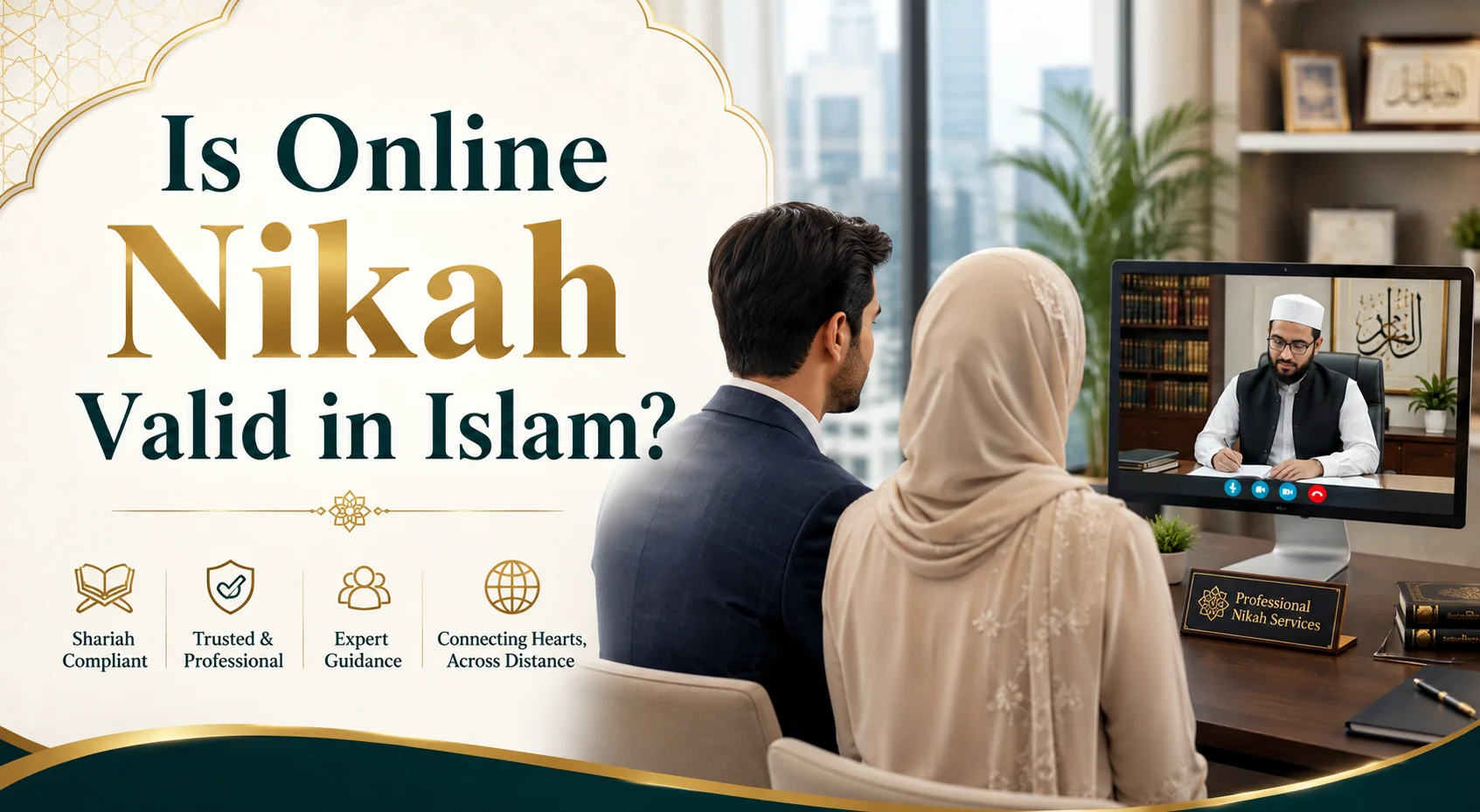

Court marriage in Pakistan is a lawful, free-will Nikah between two consenting adults, completed through proper Nikah solemnisation, a signed Nikah Nama, and registration with the local authority. This guide is for couples in Karachi, Lahore, Islamabad, Rawalpindi, and across Pakistan who want to understand exactly what the law requires, which documents are needed, and how the marriage is registered and recorded. It sets out the eligibility, the paperwork, and the step-by-step process in plain terms.
Speak to our court marriage lawyers in confidence. Call or WhatsApp +92 336 3747047 for lawful court marriage, Nikah, and registration assistance in Karachi, Lahore, Islamabad, and Rawalpindi.
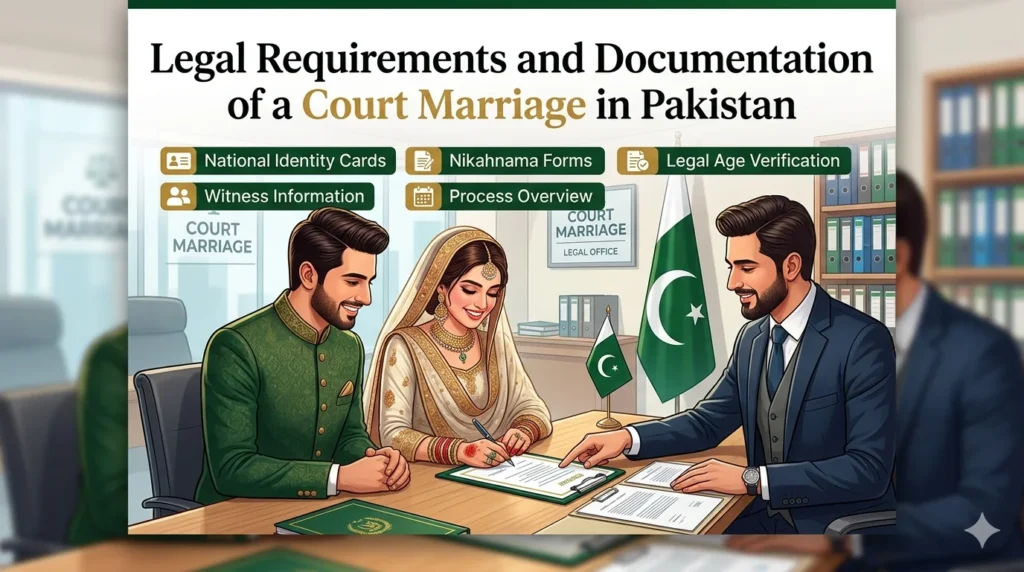
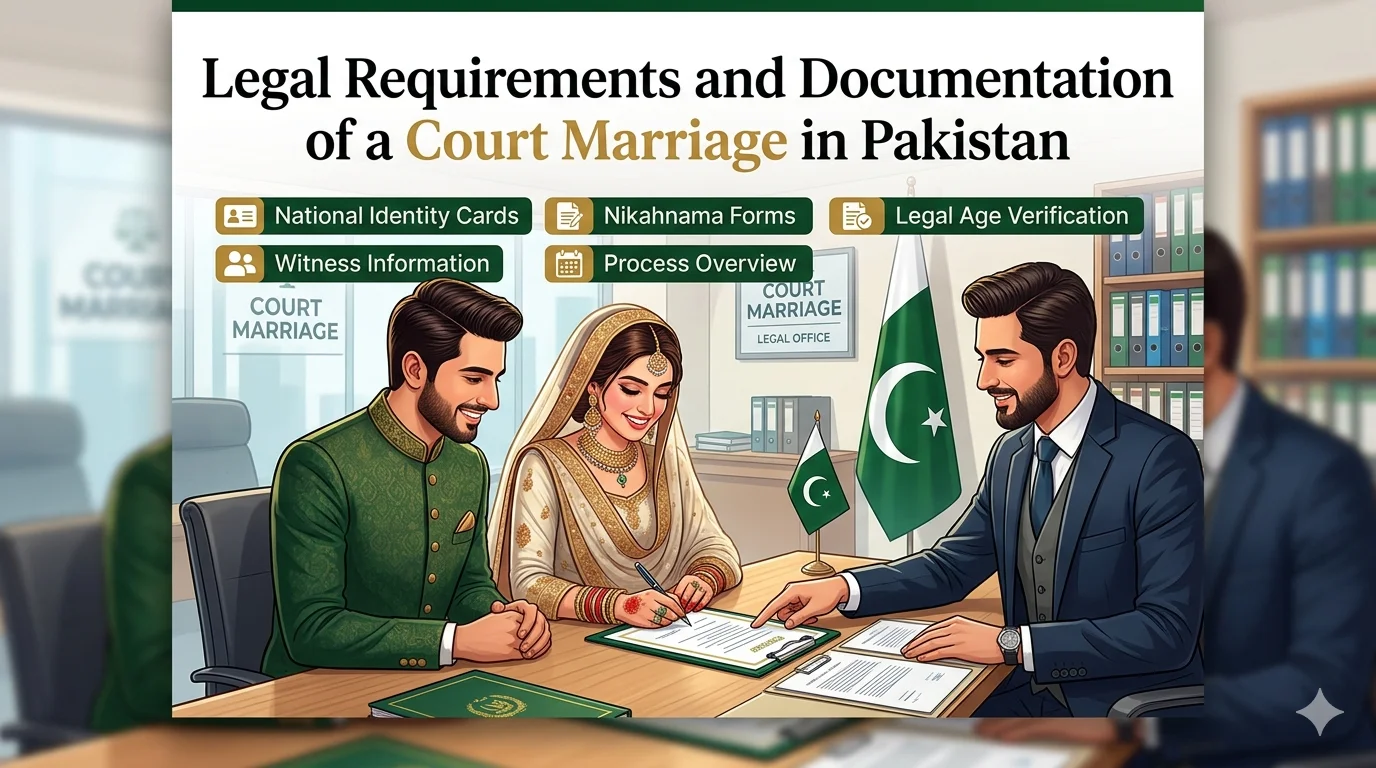
A court marriage in Pakistan is a lawful marriage solemnised through Nikah by free will, then documented and registered under Pakistani family law. It is not a separate religious ceremony from Nikah; it is the same Nikah, completed with correct documentation and registration so that the marriage is legally recognised and enforceable.
Couples often assume a court marriage needs a judge. It does not. The Nikah is solemnised by an authorised Nikah Khawan, Qazi, or licensed Nikah Registrar, and the role of the lawyer is to ensure the process and the court marriage documents in Pakistan are correct, complete, and lawful.
A court marriage is fully valid in Pakistan when the Nikah is solemnised by an authorised person, the Nikah Nama is signed by the parties and witnesses, and the marriage is registered with the relevant Union Council, Cantonment Board, or Town/Tehsil authority. You can read the detailed court marriage rules in Pakistan for the legal framework.
The legal requirements for a court marriage centre on the couple’s eligibility, the presence of witnesses, and free, informed consent. Meeting these requirements is what makes the Nikah lawful and the registration valid.
Both parties must have the legal capacity to marry. This means each person is of legal age, of sound mind, marrying of their own free will, and free to marry — that is, unmarried, or lawfully divorced or widowed with the position properly documented.
The minimum legal age for marriage in Pakistan is 18 years for both the man and the woman. Free will is essential; the marriage must be entered into by genuine consent, without coercion, and this consent is reflected in the documentation.
Witnesses are a core requirement for a valid Nikah. For a Sunni Nikah, this generally means two adult Muslim male witnesses, or one male and two female witnesses. Witnesses may be relatives of the bride or groom where legally competent, and their CNIC copies form part of the record.
Where required, the bride provides a free-will affidavit confirming that she is entering the marriage of her own choice. This affidavit, signed by the bride and attested by a notary public or oath commissioner where applicable, supports the lawful, consensual nature of the court marriage.
+92316-6644789
+92302-6644789
+92333-2316871
The documents required for a court marriage depend on whether the parties are Pakistani nationals, divorced or widowed, or overseas Pakistanis and foreign nationals. The table below sets out the typical documentation. Having these ready before the Nikah avoids delay in registration.
Category | Documents typically required |
Pakistani nationals | Original CNIC of bride and groom; passport-size photographs; witness CNIC copies; bride’s free-will affidavit where applicable |
Previously divorced | Divorce certificate or deed confirming legal capacity to remarry |
Previously widowed | Death certificate of the former spouse confirming legal capacity |
Overseas Pakistanis / foreign nationals | NICOP or valid passport; CNIC where held; supporting identity and marital-status documents, subject to verification |
The exact set of documents may vary with the facts of each case and is confirmed at the outset. For foreign nationals, identity and marital-status verification applies, and no embassy NOC is required for the court marriage itself.
Pakistani nationals generally need their original CNICs, passport-size photographs, and witness copies of CNICs, together with the bride’s free-will affidavit, where applicable. These form the basis of the Nikah Nama and the Union Council record.
Where either party was previously married, legal capacity must be shown. A divorced person provides a divorce certificate, and a widowed person provides the death certificate of their former spouse, confirming they are free to marry.
The court marriage process follows a clear sequence, from verification through to the issuance of the marriage certificate. The serial steps below show how a lawful court marriage is completed and recorded in Pakistan.
A useful point of accuracy: NADRA verifies and records the marriage through CRMS but does not itself issue the marriage certificate — that certificate is issued by the Union Council, Cantonment Board, or relevant local authority.
A court marriage in Pakistan has a defined set of characteristics that distinguish it as a lawful, documented union:
The advantages of a court marriage explain why so many couples in Pakistan choose this lawful, documented route:
Pakistan Marriage Services assists couples with lawful court marriage, Nikah, and registration in Karachi, Lahore, Islamabad, and Rawalpindi, as well as other cities across Pakistan. Each city is served with the same legal standards and confidential handling.
Whether you need a court marriage in Karachi, a court marriage in Islamabad, a court marriage in Lahore, or a court marriage in Rawalpindi, the process and documentation follow the same lawful framework. For couples abroad or in different cities, online Nikah with proper registration is also available.
Couples across Pakistan choose Pakistan Marriage Services for clear, practical reasons:
A court marriage in Pakistan requires both parties to be of legal age and sound mind, marrying by free will and free to marry, with the Nikah solemnised by an authorised person, witnesses present, and the marriage registered with the local authority.
The core documents are the original CNICs of the bride and groom, passport-size photographs, and witness CNIC copies, with the bride's free-will affidavit where applicable. Divorced or widowed persons also provide a divorce or death certificate showing legal capacity.
The minimum legal age for marriage in Pakistan is 18 years for both the man and the woman. Both parties must also marry of their own free will, which is reflected in the documentation.
No. A court marriage does not require a judge to solemnise it. The Nikah is performed by an authorised Nikah Khawan, Qazi, or licensed Nikah Registrar, and the marriage is then registered with the local authority.
For a Sunni Nikah, two adult Muslim male witnesses, or one male and two female witnesses, are generally required. Their CNIC copies form part of the marriage record.
The Computerised Marriage Registration Certificate is issued by the Union Council, Cantonment Board, or Town/Tehsil authority. NADRA verifies and records the marriage through CRMS but does not itself issue the certificate.
The Nikah Nama is the primary marriage contract, but registration with the Union Council and the resulting Marriage Registration Certificate complete the legal record. Both the Nikah Nama and registration matter for full legal recognition.
Yes. Overseas Pakistanis can complete a lawful court marriage or online Nikah with proper registration, using NICOP or a valid passport for identity, with most documentation handled remotely and no embassy NOC required for the marriage itself.
The Nikah and signing of the Nikah Nama are usually completed quickly, often within the same day, while Union Council registration and the certificate typically follow within a short period, subject to verification.
Yes. A court marriage is handled with confidentiality and privacy, and the couple's documentation is managed discreetly throughout the process.
Pakistan Marriage Services provides legal assistance for Court Marriage, Online Nikah, and marriage registration across Pakistan under the legal supervision of Zaheer Ahmed Qazi (Advocate High Court) and the management of Advocate Sobia Mohsin, Family Lawyer.
Karachi Head Office: Qanoon House, Johar Chowrangi, Gulistan-e-Johar, Karachi, Pakistan
Court Marriage | Online Nikah | Nikah Nama | NADRA Marriage Certificate